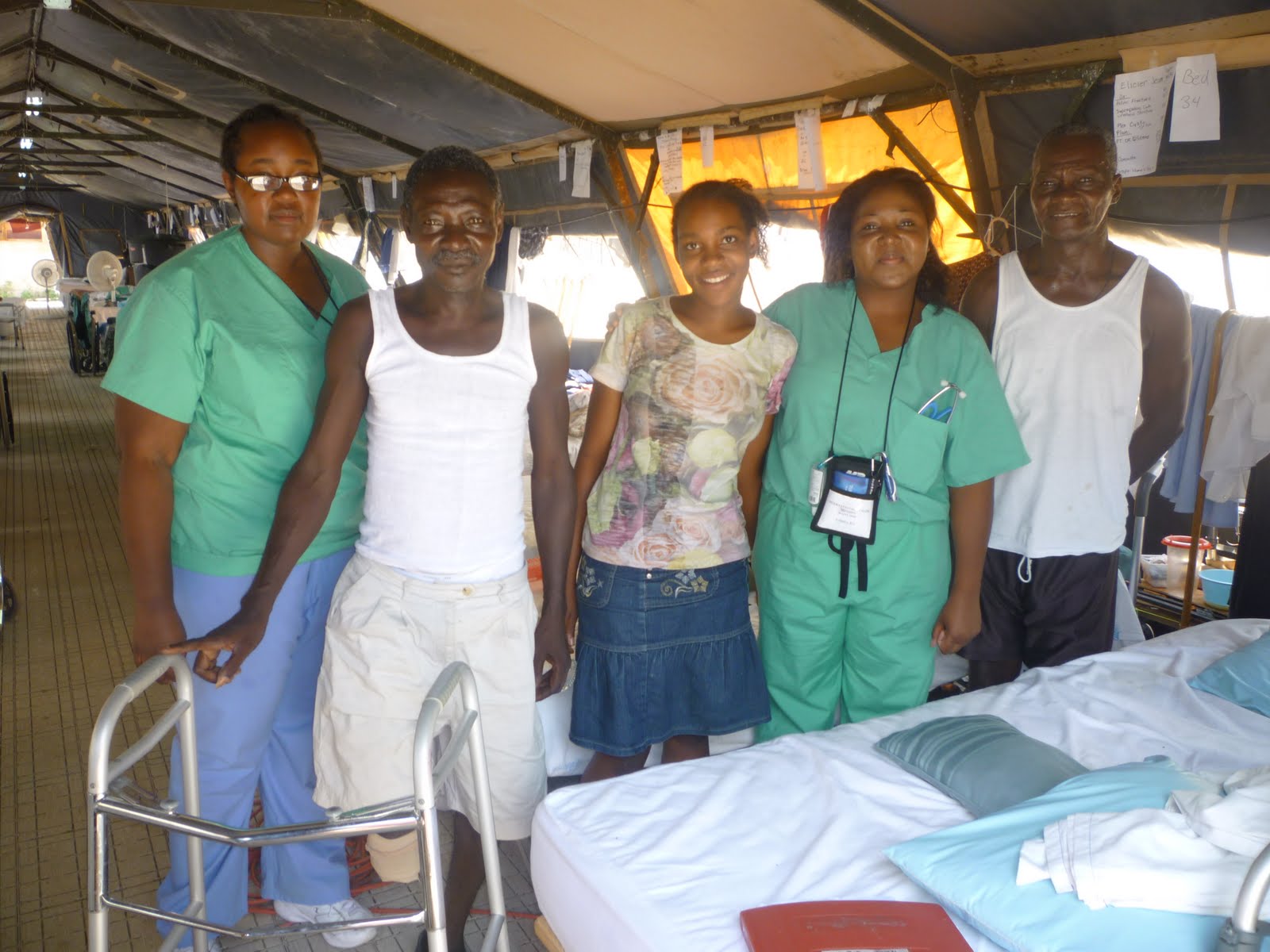
Wednesday, August 25, 2010

Suspension of Disbelief

When we experience a movie, book, or piece of art, part of the onus is to suspend our disbelief in the artificial nature of the medium. But what if the medium is actually more realistic than the original art form? And how do we allow our minds to move beyond our daily constraints of rational thought to become truly creative? I found myself pondering these thoughts as I was sitting in an open air theater the other night in Laguna Beach during a performance of “Pageant of the Masters.”

I’m on the West Coast this week in part as visiting professor at Cedars Sinai. However, given that both of our sons are here, the trip was expanded to include this past weekend where everyone met in Solvang (where the movie “Sideways” filmed.) The ride back to LA paralleled the Pacific Coast Highway, leading to thoughts of motorcycles with the boys, but that’s for a future blog.


On Monday, we went to Orange County to catch up with some old friends. Tickets had been purchased for a show at the Art Center, where classic paintings apparently “come alive.” Although it meant a late return to LA, at least the traffic on the 405 would be light, and I agreed. Prior to the show, which begins at sunset, an open air art gallery was in full swing. I was never a great student of Art History; however, I am always amazed at how an artist can transform disparate colors, textures, and materials into shapes and objects that elicit a visual and emotional response.

The Pageant has been held since 1936. Classic paintings are recreated with real people posed as if they were part of the painting. The entire experience is set to music with a narrator acting as your guide through the gallery. The theme was “Eat, Drink, and Be Merry,” and ranged from Jan Steen, through Larsson, ending with the traditional DaVinci’s “Last Supper.” Even when you watch the actors being posed, it is difficult to believe they aren’t part of the painting, as the lights are dimmed and then reignited. I was mesmerized, and found myself feeling connected with the artist and what they were trying to capture centuries ago. The rational mind quieted and the experiential mind was released.


So it is with our own creativity. When are able to release our overthinking of what is real, we are able to imagine what can be. For a brief time today, suspend your disbelief and dream. ....And if you're really brave, share the dreams with others.

Thursday, August 19, 2010

Motivation


“Remove barriers that rob people in management and in engineering of their right to pride in workmanship. This means inter alia,(among other things) abolishment of the annual or merit rating and of management by objective, management by the numbers.” -Edward Deming, father of Total Quality Management

“Happiness is in the taste, and not in the things themselves; we are happy from possessing what we like, not from possessing what others like.” - Francois de La Rochefoucauld 17th century French writer and philosopher


At school, we are currently involved in a year –long study of quality improvement in health care. I have been to the Institute for Healthcare Improvement, to examine opportunities to help drive a transformation of care delivery. As my classmates and I sit at night in the courtyard of the Brookline Marriott, we debate what influences people in their behaviors. As leaders, we need to understand motivation, both of those we lead as well as ourselves. Is it money? Clearly, we all want to be fairly compensated for the work we do, and have the ability to provide for our families. Yet we all have employees who leave for other opportunities, despite offers of increased pay. Is money merely a way to keep score? “This year I received 4%, last year 3%, so I must be doing better.” But we know in our hearts whether our efforts are consistent with our values and abilities. More importantly, we tend to stay in jobs and relationships where we feel valued and respected. Some of the greatest influences of my own sense of self have not been my paycheck, but the connections and accomplishments I was able to achieve with others. And it is even more apparent as I am examining new opportunities professionally as well as anticipating my return to Haiti the second week in September.

Many of you know that I grew up in a working class steel town in Northeastern Ohio and was fortunate enough to attend good colleges and medical school through a combination of scholarships, loans, and work. My initial goals were to be professionally successful and financially self sufficient, to assure that my children could be raised and educated with a degree of security. I judged my success by external markers. It has only been in the last few years that I realized how right Deming was. The sense of purpose engendered by pride in your work and your life eclipses a number. And many of the most successful leaders I know, who motivate themselves and others on pride and mission, at the same time achieve remarkable financial results.


So it is with a sense of pride in the work and joy in the experience that I am looking forward to my return to Milot, as well as the next phase of my professional life. And for all of you, who are at various stages of your own journey, may you focus the light of your energy toward fulfillment.


And if you make a few extra bucks along the way, and enjoy a vacation or other great experience, so much the better.

Monday, August 16, 2010

Days of Cash and Orders of Magnitude

It has been awhile since I updated the blog, and in some ways, I was wondering what new insights might be interesting and enlightening to those of you still following my thoughts. Then, once again, a confluence of disparate experiences provided me a new perspective.


I’ve just returned from my 3 week session in Boston with my colleagues at the Masters in Health Care Management program. We spent a great deal of time on the financial structures of hospitals, endowment portfolios, and concluded with a project analyzing and rating bond proposals. As my team worked through financial statements to determine liquidity, we calculated days of cash on hand. In all the statements, the numbers were expressed in thousands of dollars. A million looked like a thousand and a billion was expressed as a million. Daily operating expenses allocated to thousands of dollars per hospital bed. It is a necessary shift in thinking as you move toward hospital administration –when your previous individual P&L was allocated to the dollar, small changes could make big differences. Now it is time for me to think on a different scale and with an eye toward the system and not the individual.

So when I opened my email the other day, I was pleased to see an update from CRUDEM and Hospital Sacre Coeur. Although the acute earthquake related patient population is drawing down, it became clear that the Hospital needed to expand to serve the population and increase the range of services. As I was leaving in April, a new NICU had been opened and the Haitian medical staff were being trained by CRUDEM volunteers. Lou Snyder, a cardiologist and classmate in Boston, had visited Haiti last month, including HSC. He was extremely impressed with the infrastructure being developed, and hoped to make cardiology services more widely available. The water plant is up and running, and oxygen system coming on line. I was excited to hear of the progress and commitment to continue to grow beyond the current 83 beds.


All this takes money. I have previously noted that on a per dollar basis, HSC provides high value medical care. So do you want to sponsor the Hospital for a full day (and increase balance sheet liquidity?) You can do so through CRUDEM – for only $2342 (that's just a "2" on our big balance sheets.) The Angel of the Day program gives everyone the ability to help the Haitian people and know where your aid is going. There are other fun events locally, including a Taste of Haiti to be held later in September in Boston. You can look on the CRUDEM site – www.crudem.org for more info.

I will be returning to Milot the second week of September. Through some degree of kharma, it will be six months from my initial visit and I look forward to sharing updates on our patients and the recovery of the Haitian people. I am truly grateful for your thoughts and encouragement. Plus, I need some new pictures to share and experiences to add to the blog. For friends and family that haven't yet been able to travel to Haiti, I hope that my words and images reflect the multiple orders of magnitude returned on your investment in time, money, and support.

I'll be blogging more as the time approaches, and certainly during the trip.

Monday, July 26, 2010

Constraints

We value personal freedom and the ability to make choices about how we live our lives. So I always thought of a constraint with a negative connotation. In my operations course we studied the Theory of Constraints in improving production. There are lots of interesting games to demonstrate the concept. By recognizing the constraint as a bottleneck, optimizing it, and developing parallel processes, we could increase efficiency. In our own lives, we deal with constraints that are both external and inherent. After taking my motorcycle road test, I realized that constraints can be both limits as well as a safety margin as you aim for a goal.

On the second day on the bikes, we spent time on emergency maneuvers such as weaves around an obstruction, stopping in a turn (straighten the wheel first), and close in directional changes. Cones were set up to simulate parked busses, guardrails, and curbs. We needed to stay within the lines, yet at the same time, use all the available space to complete the task safely. On my practice course reversal, I was so intent on staying far from the line, that I got too slow and too tight, and I gently dropped the bike. Having the will to get close to the edge, with adequate power, made all the difference. The only points I lost on the test were for not staying on the throttle through the curve. I had plenty of room to lean and look to the end of course, but old habits, and a bit of fear, took over. I was pretty giddy, nonetheless, to get my certificate.

The ultimate study in bottlenecks is the DMV. I went to Warwick for the “express” service. It was actually interesting to watch the rate inflow based on type of service and number of clerks. I also saw pragmatism at its best. People that could not wait any longer would give their number to someone who had a higher number, who would subsequently do the same for someone else. Even if the gain wasn’t that great, the smiles were worth it. I suppose you could start a scalping business if you got there early enough….

Now the current constraints about getting a bike involve parking, location, and a few other factors. I did get a nice e mail from my son in LA. He’s thinking about bike school and maybe a trip for us up the Pacific Coast Highway. I don’t know about you, but one of the things that keeps me going is planning trips and new experiences for the future.I can imagine the sunlight reflecting off the waves and the smell of air.

And I’ll remember the constraints of safety gear, weather limits, and my own abilities – I want to stay around for quite a few more miles.

Wednesday, July 21, 2010

Power Through the Curve

Often during a change in direction, when the path is heading off course, additional power is required.


I shared with you my experiences of faith during a taxi ride on the back of a 125 cc motorbike from Cap Haitian to Milot. I found that by leaning with the driver and allowing myself to flow with the machine, I not only traversed a distance, but also experienced the world in a different realm. I have read Pirsig’s “Zen and the Art of Motorcycle Maintenance” both in college and again over the last few years. Although it is in part an autobiographical story of a motorcycle trip he took with his son, the underlying philosophical discussions center around the dynamic tension with the Zen of being in the moment, and the importance of rational thought and action to maintain order.

I had a little free time before going back to Boston for school this summer. And despite the ribbing of my sons about a midlife crisis, I enrolled in the Rhode Island motorcycle school at CCRI. My classmates were as diverse in their own ways as my colleagues at Harvard - yet with a shared interest. Our first day was spent in class understanding the mechanics of a bike, how it differed from a car, risk recognition and management (right up my alley), and the mindset needed to ride safely. There would be a lot of counterintuitive mind/muscle memory training. For example to turn a bike right, you push the right handlebar down and away, causing a lean. If you feel the changes, your body will follow and you must look far into the distance, of not where you are now, but where you want the bike to go. And here’s the cool thing, if you start to go wide, you can’t roll off the power or hit the brake as you’ll lose traction and stability. Instead, you must lean harder and add more power to drive yourself through the turn and back on course. It takes both the Zen of the moment and the rationality of basic physics. With thought, none of this surprised me. In flying, when you start a turn, you add back pressure since you are changing the component of lift, and add power to maintain airspeed. I know I’ve done that right when I take someone along, bank 45 degrees to the right so they can look down the wing, and they feel no sense of falling, just gentle pressure into their seat.

Today was a 5 hour riding range starting at 0645. The bikes had seen their share of students, with scratches and dents, but the headlights still glowed and the controls were responsive. Despite the heat we all wore long sleeves and pants with boots, helmets, and gloves. After some basic warm ups, we began track work. I was having trouble with my turns –until I realized I wasn’t looking where I wanted to be, I was looking just in front of me. Once I trained myself to look beyond the entrance, to the end of the curve, it all fell into place. As I rolled on the throttle, the bike became more stable. As we practiced panic stops, I was able to modulate how hard to squeeze (after I’d locked up the wheels a couple of times.) The time went quickly, and I’m looking forward to another session tomorrow.

I’ve sometimes been accused of thinking too much, and at other times being a bit impulsive. What I am learning during this change in direction is that we can and should experience both the real and romanticized aspects of life.

And sometimes Zen will tell you to add power and lean in, even if it doesn’t seem rational.

Friday, July 16, 2010

Anniversaries


This week marks six months since the earthquake that devastated Port au Prince, sent shockwaves around the world, and altered lives both for the victims and those that cared for them. Although my initial entries were optimistic regarding the recovery, the pace is much slower than any of us would like, and the underlying government and infrastructure issues remain. The President has been seen intermittently, yet a truly functional oversight system is nonexistent.(picture is of the presidential palace before and after) Aid continues to come in, albeit at a reduced pace. There are articles suggesting that large fortunes will be made by bidding out reconstruction projects. One would hope that this money will stay in Haiti, but history would predict otherwise. Nonetheless, the milestone of a six month anniversary, and the coverage it receives, will once again increase awareness. Hopefully, it will also provide a chance for reevaluation and course correction.

My last blog discussed the concept of the golden hour and how we mark and experience the passage of time. Anniversaries provide resting points along this continuum. How do we set goals, when we don’t have a tangible end in sight? How do we reflect on what we have accomplished if we don’t pause and mark the progress compared to similar periods? And why do some religions mark the anniversary of a person’s death, rather than their birth?

At least when we’re younger, all of us looked forward to our birthdays. It would mean a party and cake, a year closer to getting a driver’s license, being able to go to bars, sign legal contracts and move toward independence. As young adults, birthdays were still fun, but began to focus on the 30th and 40th. Had we reached personal goals? What should we do in our relationships? How have family dynamics changed? For those of us now in our 50’s and 60’s, birthdays seem to come more frequently. Fortunately many of us are still active and working on healthy lifestyles. If we’ve had children, they are going out into the world and we have the chance to redefine what we want in our own lives. Our birthdays and anniversaries of relationships or jobs become times to celebrate what we have done, but also reevaluate what our future should look like. The midlife crisis is in fact a good thing, as it challenges current thinking. Finally the 70’s and 80’s aren’t old anymore. Active travel, new job and volunteer opportunities (several of my colleagues in Milot were in their 70’s), make the transition to what is hopefully a brief period of decline.

In Judaism, we are instructed to celebrate the date of our relatives’ deaths, not their births. A candle is lit and one goes to the temple to recite “Kaddish” a simple prayer of faith. You often see others, whose family member had the same date, and even if it’s been a year, there is still an acknowledged connection. The Yartzheit (Year passed) symbolically marks the movement of the departed to the next higher level. Regardless of the symbolism, I realize that I wasn’t alive at the time of my loved one’s birth, but experienced their lives as well as their passing. So it is an appropriate anniversary to celebrate and remember. Other religions celebrate the birth of their saviors as a mark for the beginning of a new age and new enlightenment. The creation of a marking point in time differentiates that moment and creates a common opportunity and experience for believers.

This week is also my own anniversary of 4 months since I went to Milot. As I think you have seen from my reflections, it has been a transformative experience. Many things have occurred that now are viewed with a different, more open perspective. I am grateful to those of you that continue to follow my ramblings, and give me support and feedback both on and offline. It is enlightening and energizing.

My hope that all of us are in a position to make decisions today that will give us new anniversaries to celebrate in the future.

Sunday, July 11, 2010

The Golden Hour

Time can be both the enemy and an ally.

In trauma surgery, we learned of “The Golden Hour.” Based on experiences from war and urban penetrating trauma, it was clear that the sooner a patient reached care after injury, the better their chance of survival. Advanced prehospital systems utilize front line providers and rapid evacuation, as well as designated trauma centers to achieve this goal. Improved survival rates from devastating injuries in Iraq and Afghanistan have left us with many young men and woman who are alive but may require extensive rehabilitation. Nonetheless, by using time to set a standard for performance, we can do miraculous things.


The opposite exists in Haiti, yet in some ways, it aids in matching available resources with patients who are most likely to benefit from them. On my first day, I saw two significant moped accidents just on my trip from the airport. Throughout my stay, we would hear of a Tap Tap accident and realize that a number of injured would die before arriving at the hospital. Those that reached us would have self selected by having stronger cardiovascular reserve and more distal orthopedic injuries. On the few occasions that a significant trauma would reach us, we had the difficult issue of limited ventilator capacity and blood banking. Similar to what we needed to do with the neonate with meconium aspiration and anoxia, aggressive intervention was not an option.


Last evening, however, I realized there was another Golden Hour – the times just before sunset and just after sunrise, when the low angle of the sun casts a golden glow over the world. Photographers use these times to stage ads, as the product takes on a warmth that emphasizes its beauty. I was coming out of Cuban Revolution around 8 and saw a rainbow, stretching across downtown. By the time I got the camera, the rainbow had disappeared, but the colors around me had softened. I appreciated nuances of architecture that I had driven by multiple times without noticing.

We think about the bright light of midday, and feel its heat. But if you look at pictures taken of someone at those times, they are often squinting, and may seem less than comfortable. Think of your own favorite moments – perhaps it is fresh coffee at dawn, or gazing over water as the sun sets. In any case, time has been your ally – it uses light to give you a golden hour of transition and enhanced beauty, then gradually lets it slip away, until you are able to experience again in the future.

When you next look at your watch, pause for a moment and appreciate what the passage of time has done for you today, and how it will lead you to tomorrow.